System Flow
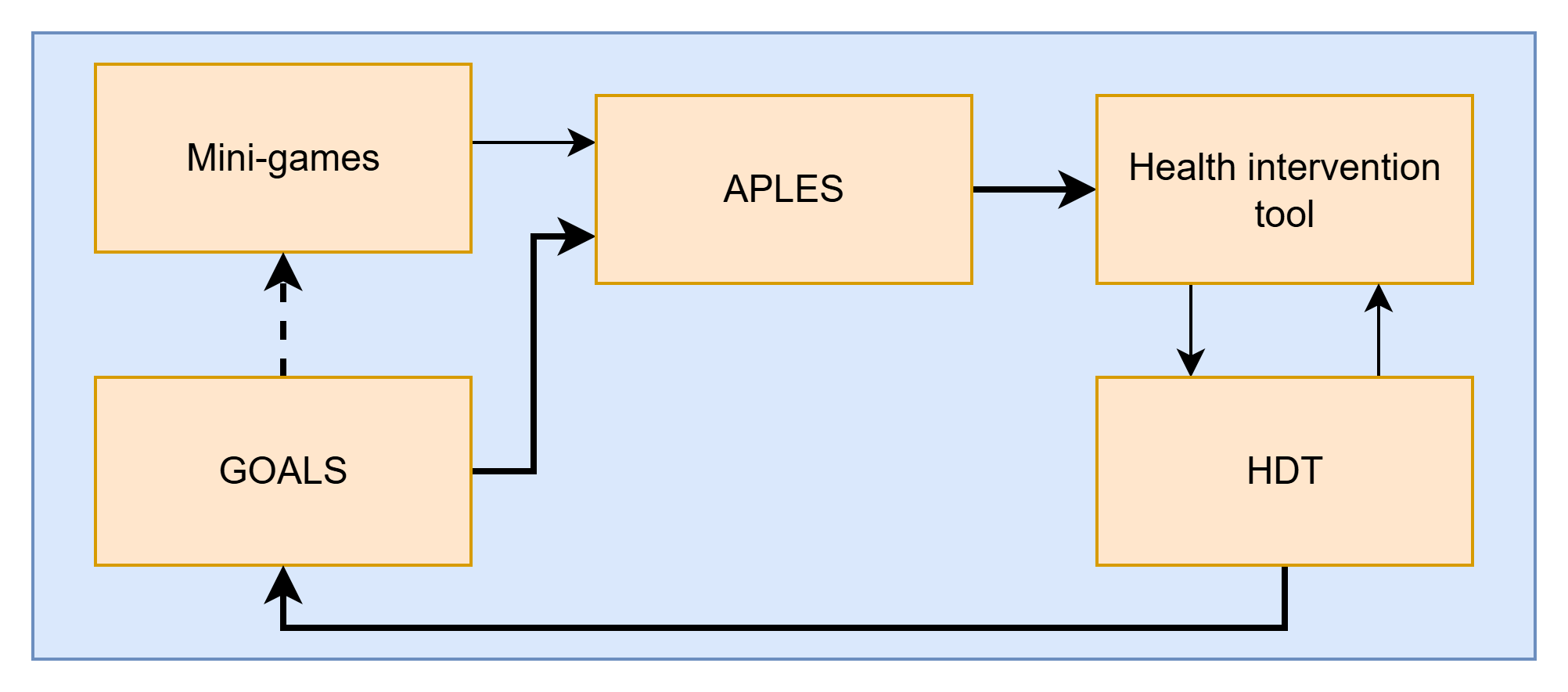
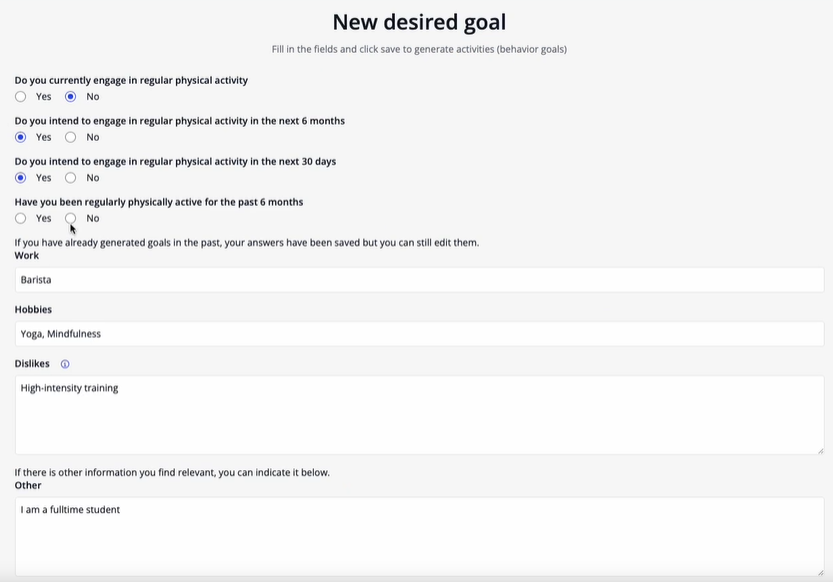
The process begins with the GOALS system, which generates health-related goals based on user profiles and available content.
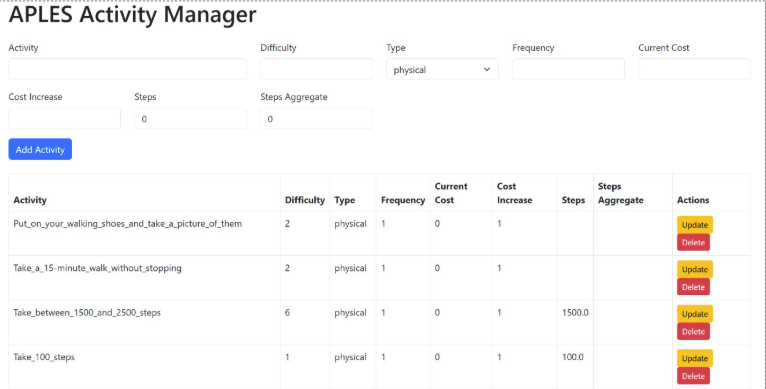
These generated goals can be used as structured content within APLES, where they are organized into
balanced level structures for a digital health intervention.
Within APLES, minigames from the HIMF act as the “fun” activities that contribute
to maintaining engagement across the intervention. APLES ensures that these fun elements are balanced with
health-related activities in accordance with designer-defined pacing and difficulty rules.
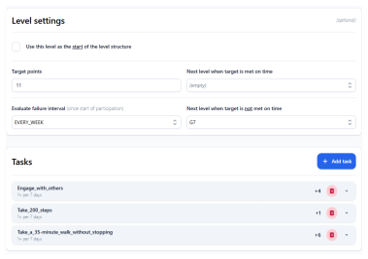
Once the level structure is generated, APLES exports it to the Health Intervention Tool,
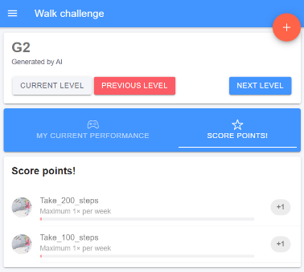
where participants interact with the intervention, that is a structured balanced level progression system in the health itnervention tool.
The Human Digital Twin (HDT) continuously collects and models real-time behavioral data from participants.
These models provide actionable insights that the GOALS system can use to refine or generate new personalized goals.
This process closes the loop, creating a dynamic system where user data continuously informs goal generation
and intervention adaptation.
Use Case: Mental Health Institute, case manager creating a health interventions for a SMI patient using the AI-tools developed as part of the thesis
This mental health use case illustrates how the integrated framework can be applied in a real-world clinical setting. While the example focuses on a Mental Health Institute supporting FACT patients, the platform is designed to be flexible and adaptable for a wide range of health domains and intervention types. The workflow demonstrates how healthcare professionals, such as case managers, can leverage the system’s tools to create, personalize, and adapt digital health interventions for individuals with complex needs. This approach aligns with the context and objectives of the original thesis, providing a practical framework for improving patient outcomes through data-driven, closed-loop personalization.
Laura is a case manager at a mental health institute, responsible for supporting eight patients diagnosed with SMI. One of her patients, John, has been struggling with anxiety and depression. To help John, Laura decides to create a digital health intervention using the AI tools developed as part of the thesis.
Laura begins by collaborating with John to use the GOALS system, which generates personalized health goals tailored to his profile and preferences. Together, they provide additional information about John’s interests, challenges, and motivations, as well as details from his treatment plan at the institute. With this input, the GOALS system produces a list of well-defined health goals for John, such as practicing mindfulness each morning with guided meditation, engaging in regular physical activity, establishing a consistent sleep routine, tracking mood and anxiety levels with a digital journal, and attending social activities to improve engagement.
After reviewing the generated goals, Laura and John select those that resonate most with him. Laura then uses the APLES tool to structure these goals into a balanced level progression, defining pacing and difficulty rules to ensure John is gradually challenged without feeling overwhelmed. She incorporates fun activities, including minigames and hobbies that John enjoys, to maintain his engagement throughout the intervention.
APLES generates a level structure that alternates between health-related activities and enjoyable tasks, and exports the structured intervention to the Health Intervention Tool. John begins using the tool, following the progression designed by Laura. As he interacts with the intervention, the Human Digital Twin HDT collects real-time data on his behavior, engagement, and progress. The HDT analyzes this data and provides Laura with insights into John’s adherence and any challenges he faces.
With these insights, Laura can use the GOALS system to refine or generate new personalized goals for John, ensuring the intervention remains relevant and effective. The system can also dynamically adapt the level structure based on John’s progress and feedback. Through this closed-loop approach, Laura is able to provide John with a personalized and adaptive digital health intervention that supports his mental health journey.